SpaceX Dragon Reaches Station With Final Power Upgrade and Science Load
TL;DR: SpaceX's Dragon C211 docked to the International Space Station at 10:27 a.m. EDT on Oct. 15, 2026, delivering more than 6,300 pounds of cargo including the seventh and eighth ISS Roll-Out Solar Arrays.
NASA's 35th commercial resupply flight under its Commercial Resupply Services agreement with SpaceX left Earth on schedule and arrived on schedule, closing a two-day rendezvous that began with a pre-sunrise liftoff from Florida.
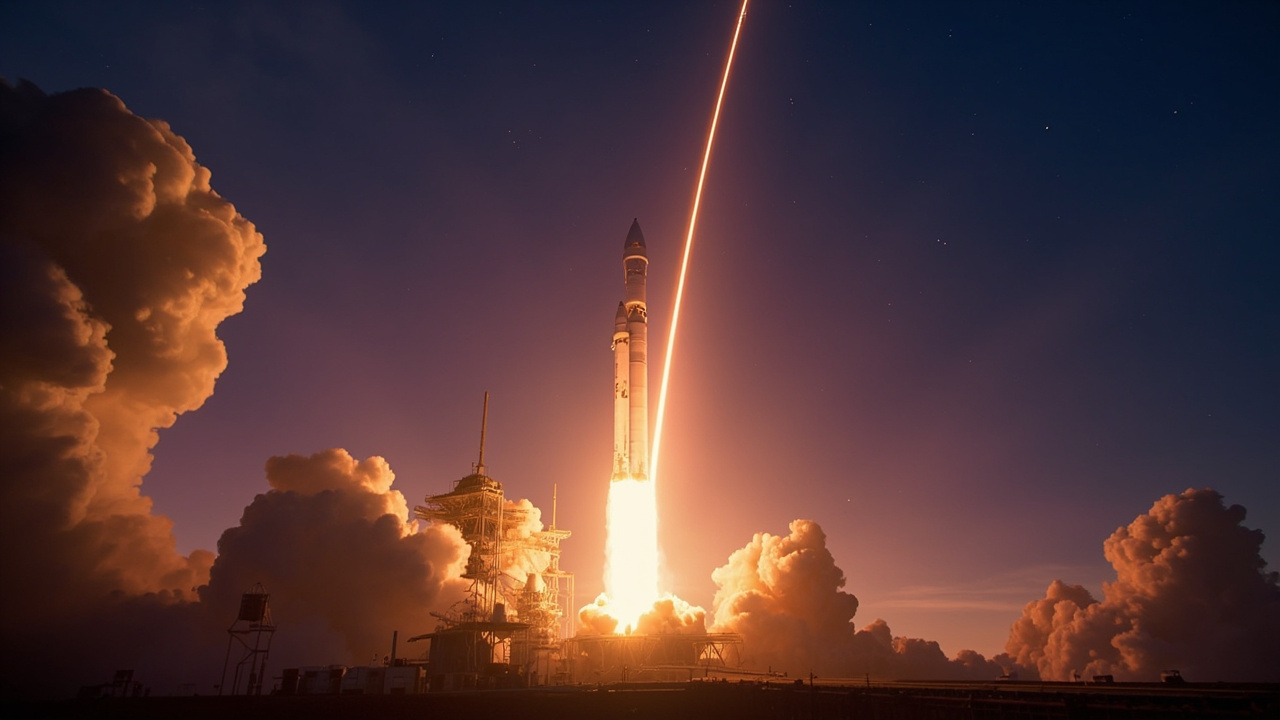
According to NASA's account titled "NASA Science, Cargo Launch on 35th SpaceX Resupply Mission to Station," a Falcon 9 lifted off at 6:33 a.m. EDT Tuesday, Oct. 13, from Space Launch Complex 40 at Cape Canaveral Space Force Station, sending the robotic Dragon toward the orbiting laboratory. The agency reported that docking occurred at 10:27 a.m. EDT Thursday, Oct. 15, at the space-facing port of the Harmony module for the Expedition 75 crew.
CBS News reported in "SpaceX launches cargo ship to space station in spectacular pre-dawn flight" that the mission carried research materials, spare parts, crew supplies and two rollout solar blankets intended to offset age-related decline in the station's original eight solar wings.
Liftoff From Pad 40 Sets Up Two-Day Rendezvous
The Falcon 9 climbed away from Pad 40 on a northeasterly trajectory, according to live reporting from Spaceflight Now in "Live coverage: NASA, SpaceX to launch new solar arrays, 6,300 pounds of cargo to the space station."
Spaceflight Now reported that liftoff was targeted for 6:33 a.m. EDT, or 1033 UTC, and that coverage of the flight began about an hour before launch. NASA confirmed the same liftoff time and launch site in its post-launch release.
CBS News reported that the booster's nine first-stage engines produced 1.7 million pounds of thrust at liftoff. About two-and-a-half minutes after leaving the pad, the first stage separated and turned back toward Cape Canaveral for a return-to-launch-site landing, while the second stage continued pushing Dragon toward orbit.
The first stage touched down near its launch pad at 6:41 a.m., heralded by two sonic booms, CBS News reported. About one minute and 10 seconds later, the second-stage engine shut down and Dragon separated for independent flight.
Observers near Kennedy Space Center saw the station pass about 260 miles overhead almost simultaneously with the ascent, moving from southwest to northeast, CBS News reported. That timing mattered because the Falcon 9 needed to climb into the same orbital plane to permit rendezvous.
The second-stage exhaust plume expanded in the thin upper atmosphere into a large backlit teardrop visible for hundreds of miles, CBS News reported. The effect, illuminated by the rising sun, is known among rocket watchers as the "jellyfish effect."
Docking Clears Harmony After Crew-12 Departure
If the flight followed its plan, Dragon would dock around 11 a.m. EDT Oct. 15, Spaceflight Now reported before launch. NASA later confirmed actual docking at 10:27 a.m. EDT Oct. 15.
The destination was the zenith, or space-facing, port of Harmony, according to both NASA and Spaceflight Now. Spaceflight Now reported that the port had recently been vacated by Crew Dragon Freedom, which returned four members of NASA's SpaceX Crew-12 mission to Earth with a splashdown on Oct. 8.
NASA said it streamed rendezvous and docking coverage beginning at 9:15 a.m. on Oct. 15 across multiple platforms. Space.com likewise noted in "SpaceX successfully launches 6,300 pounds of cargo to the International Space Station" that arrival coverage started at 9:15 a.m. EDT.
The flight is designated CRS-35, the 35th mission SpaceX has flown under a Commercial Resupply Services contract with NASA, NASA and Space.com reported.
Flight-Proven Booster and Capsule Pair
Spaceflight Now identified the Falcon 9 first stage as booster B1096 and the cargo capsule as Dragon C211.
The booster was making its eighth launch, Spaceflight Now reported. Its earlier assignments were NASA's IMAP, CRS-34, NROL-77, NROL-95, GPS-III 9, Kuiper Falcon 01, and Starlink 6-87.
Dragon C211 was making its fourth flight to the station, Spaceflight Now reported. Its previous cargo runs were CRS-26, CRS-29 and CRS-33.
After docking, the spacecraft is expected to remain attached for about a month, Spaceflight Now and Space.com reported. NASA said Dragon is scheduled to stay until mid-November, then depart and return to Earth with time-critical research and other cargo for a splashdown off the coast of California. Space.com specified a Pacific Ocean splashdown under parachutes off the California coast.
Space.com noted that Dragon is the only currently operational freighter able to bring cargo back downward, while Russia's Progress, Japan's HTV-X and Northrop Grumman's Cygnus XL are expendable and burn up in the atmosphere after leaving the station.
Final IROSA Pair Completes Power Augmentation
Mounted in Dragon's unpressurized trunk was the final pair of International Space Station Roll-Out Solar Arrays, known as IROSAs, NASA reported.
The arrays are intended to augment electricity generation from the aging station systems, supporting research, operations and the station's eventual safe, controlled deorbit, NASA reported.
Six IROSA blankets were installed during spacewalks beginning in June 2021, CBS News reported. The seventh and eighth arrays carried by CRS-35 will be installed during spacewalks planned for later this fall, NASA reported. CBS News placed those outings later in October and in early November.
The IROSA hardware weighed 2,635 pounds on Earth and rode in Dragon's trunk section, CBS News reported. Each blanket generates 20 kilowatts, and together with the original wings restores output toward factory-fresh levels, CBS News reported.
Dana Weigel, director of low-Earth orbit operations at Johnson Space Center, said the new blankets go over and in front of the existing wings, with exposed portions of the older wings continuing to generate power in parallel, CBS News reported. Weigel said the IROSA cells are more efficient and have higher energy density, so an IROSA paired with an original wing produces more than an original wing did when new.
Astronauts will install the new blankets during a series of spacewalks planned for later this fall, NASA reported.
6,300 Pounds Includes Food, Spares and Station Hardware
Dragon carried more than 6,300 pounds of supplies and hardware, or 2,860 kilograms, NASA and Space.com reported.
CBS News broke down part of the pressurized manifest as 844 pounds of crew supplies, 1,307 pounds of science gear, 417 pounds of spacewalk equipment and 880 pounds of vehicle hardware and computer gear.
Fresh food aboard included oranges, apples, grapefruit, tomatoes, blueberries, baby carrots and mini sweet peppers, CBS News reported, citing Bill Spetch, space station program manager. The same account listed a pizza kit, cookies and candy, plus special holiday items.
Spaceflight Now, citing Bill Spetch as deputy manager of Commercial for NASA's Low Earth Orbit Program, listed additional equipment including a dose pump for the station toilet, pre-treat quality sensors, and a robot tool used for maintenance and utilization tasks involving external replacement units.
Also in the trunk was a clamshell apparatus built to house the failed Canadarm2 joint removed during the June 30 spacewalk, Spaceflight Now reported.
Once Dragon leaves in mid-November, NASA said it will bring home research results and cargo for recovery off California.
Retinas, Heart Tissue, Glass and Brain Organoids
Several new experiments rode to orbit inside Dragon, NASA reported.
Hardware will support manufacture of artificial retinas in microgravity with potential to help restore vision for patients on Earth, NASA reported. Another payload involves 3D heart-tissue models intended to advance large-scale drug testing on future space missions, NASA reported.
Materials aboard will support study of how a new type of glass forms in microgravity, NASA reported. Other cargo includes brain organoids that could reveal treatment targets for neurodegenerative diseases including Alzheimer's, Parkinson's and multiple sclerosis, NASA reported.
Spetch described the research complement as including studies to manufacture artificial retinas, examine microgravity effects on 3D heart-tissue models, study glass made with non-traditional elements, and examine links between inflammation and neurodegenerative disease, Spaceflight Now reported.
NASA noted that the station hosts hundreds of investigations spanning biology and biotechnology, physical sciences, and Earth and space science. The agency said research aboard benefits people on Earth and supports preparation for deep-space missions, including Artemis lunar missions ahead of eventual human exploration of Mars.
What Comes Next Before Departure
The immediate next milestones are power-installation spacewalks and continued science operations during Dragon's roughly month-long stay.
NASA said astronauts will install the final IROSAs during spacewalks later this fall. CBS News specified outings later in October and early November for the seventh and eighth blankets.
Dragon is scheduled to remain docked until mid-November, NASA reported, before departing with research and cargo bound for splashdown off California.
For station watchers, NASA pointed to its station blog and its accounts on X, Facebook and Instagram for updates on activities following the Oct. 15 docking.
Sources referenced
- NASA Science, Cargo Launch on 35th SpaceX Resupply Mission to Station - NASA (https://www.nasa.gov/news-release/nasa-science-cargo-launch-on-35th-spacex-resupply-mission-to-station/)
- SpaceX Dragon Docks with Science, Supplies, and Roll-Out Solar Arrays - NASA (https://www.nasa.gov/blogs/spacestation/2026/10/15/spacex-dragon-docks-with-science-supplies-and-roll-out-solar-arrays/)