TL;DR: SpaceX's Starship reached orbit for the first time on Sept. 28 during its 14th uncrewed test flight and released 26 Starlink V3 satellites before a shortened Pacific splashdown.
SpaceX achieved orbital flight with its giant Starship vehicle for the first time on Monday, Sept. 28, then cut the planned mission short after an engine shutdown, while NASA and SpaceX pressed ahead with final countdown rehearsals for the Crew-13 astronaut launch targeted for Oct. 1.
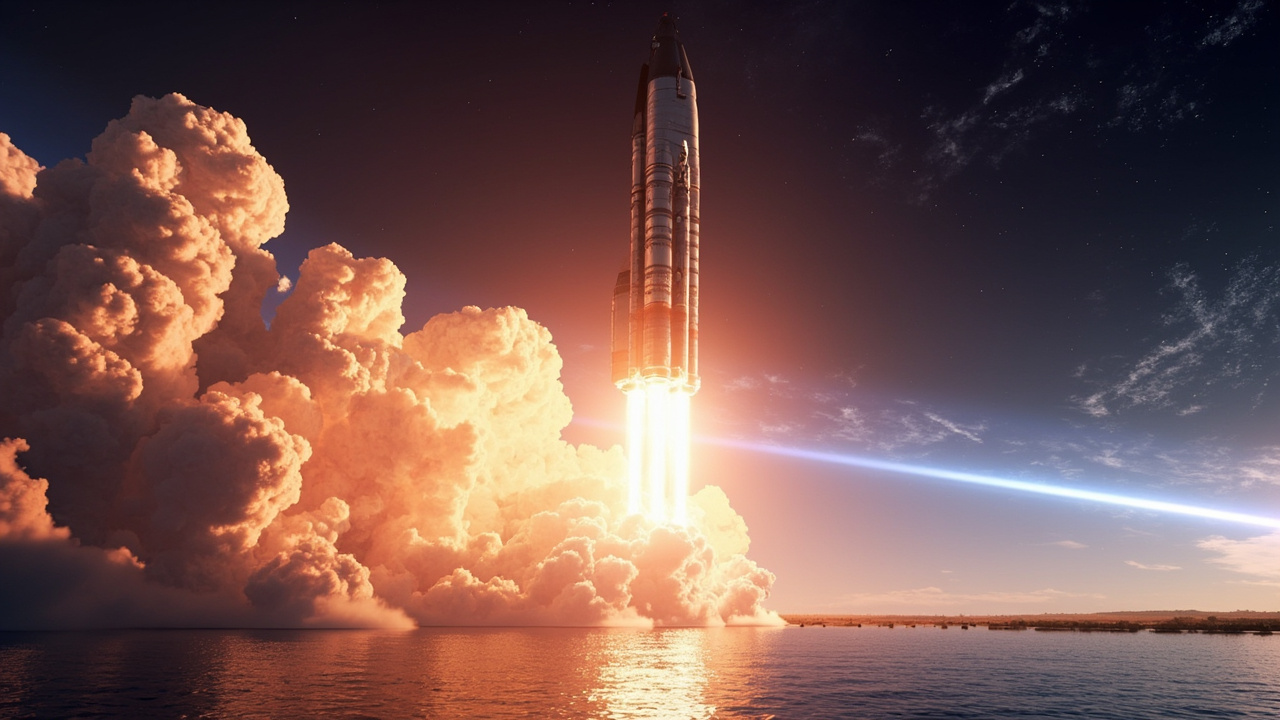
The uncrewed Starship test lifted off from the company's Starbase complex along the Gulf of Mexico near Brownsville, Texas, according to Reuters. The 40-story-tall stack pairs a Super Heavy booster with the upper-stage Ship vessel. It was the 14th test flight in a program that began in 2023. For the first time, the mission carried a paying cargo into space, with millions of dollars' worth of Starlink satellites aboard even as the final vehicle design remained under development.
The flight plan called for a 10-hour mission. It lasted about three hours instead, after one of the Ship's three main engines shut down prematurely following separation from Super Heavy, according to Reuters. SpaceX spokesperson Dan Huot initially told viewers on the company's live stream that the team had decided not to proceed toward orbit. Minutes later, after additional engineering review, Huot updated the call and said the vehicle could use other onboard engines to complete the orbit-insertion burn. The Ship then successfully entered orbit.
Engine call reshaped the flight in minutes
The in-flight decision sequence was unusually public. Huot announced the no-go for orbit, then reversed course when engineers confirmed an alternate engine plan could still place the craft into orbit, according to Reuters. That revised burn succeeded.
The propulsion problem was not isolated to the upper stage. Some engines on the Super Heavy booster also stopped working during its descent, SpaceX said, according to Reuters. The booster still completed an engine-controlled splashdown in Gulf waters. That outcome followed hard landings for the booster on two previous missions.
The early engine shutdown echoed a lingering pattern. Engine issues had appeared on some earlier Starship flights in space, an area important for maneuvering beyond low orbit, according to Reuters. The capability matters less for Starlink deployments in low orbit than for later assignments that would send Starship toward the moon with NASA astronauts.
Central Florida Public Media reporting carried by NPR described a similar sequence. All 33 engines on the Super Heavy booster ignited for liftoff on a clear early morning. About two and a half minutes later, the Ship separated and ignited its six engines, with one shutting down early. Engineers then had minutes to weigh whether to attempt orbit or return without reaching it. The broadcast captured the moment controllers committed to the revised orbit attempt.
Two laps, 26 satellites and a first paying mission
Once in orbit, Starship released 26 next-generation Starlink V3 satellites one by one at roughly 269 km, or 161 miles, in altitude, according to Reuters. The deployment marked the first orbital payload delivery by Starship.
SpaceX founder Elon Musk wrote on X that all 26 Starlink V3 operational satellites were deployed and operating nominally, according to Reuters. Aerospace engineer Dean Sladen told Reuters that placing the full group into the target orbit represented a major win because the flight was Starship's first revenue-generating commercial mission, while also highlighting how the team managed the ascent engine failure.
Reporting carried by NPR said the new Starlink spacecraft represent a brand-new iteration for the company's internet constellation. The satellites are large and can only be launched on Starship because of their size. The flight therefore tested both the launcher and the start of a new deployment approach for the broadband network.
Financial markets reacted cautiously. SpaceX shares fell 2% on Monday, according to Reuters. The company was valued at $2 trillion as of Friday's close, with much of its market worth and investor confidence tied to Starship's progress toward routine service. Reuters reported that it was unclear how much of a setback the engine failure would pose for the goal of moving the powerful spacecraft into routine service later this year.
Starship was designed as the world's first fully reusable spacecraft, according to Reuters. Reuse remains central to SpaceX's business case for frequent, lower-cost launches of heavy payloads and large satellite batches.
Pacific splashdown ended shortened flight
After two circuits of Earth during the roughly three-hour mission, Starship headed for a controlled descent into the Pacific Ocean, according to reporting carried by NPR. SpaceX had originally planned a 10-hour flight but elected to bring the vehicle home early because of the engine issue.
The final maneuver flipped the vehicle vertical with thrusters so it struck the sea in a nose-up position, according to Reuters. Fire engulfed the base at touchdown before the vehicle tipped onto its side, followed by a large fireball. The company had not planned to recover and reuse the spacecraft from the sea after the mission.
The ocean ending fit the test nature of the flight. Earlier Ship vehicles had also targeted ocean splashdowns to conclude missions rather than attempting recovery. Full reuse would require both stages to return intact for refurbishment and reflight.
The timing carried symbolic weight. Reporting carried by NPR noted that the orbital success came 18 years to the day after SpaceX's first rocket, the Falcon 1, reached orbit. The 170-foot-tall Starship upper stage is vastly larger than that early vehicle, reflecting how the company's ambitions have grown from small launch services to heavy-lift transportation.
Don Platt, director of the Spaceport Education Center at the Florida Institute of Technology, said the company was in a better place after getting an orbital mission completed, while noting that many issues still required attention, according to reporting carried by NPR.
Why NASA is watching Starship closely
NASA selected Starship as one of two potential vehicles to land humans on the moon, according to reporting carried by NPR. The agency needs a lander capable of carrying astronauts from lunar orbit to the surface and back.
The Artemis III mission, launching late next year, will test the ability of the Orion crew capsule to rendezvous and dock with potential lunar landers, including Starship, according to reporting carried by NPR. That mission will not itself attempt a lunar landing in the current plan but will exercise the rendezvous techniques needed for later surface missions.
Platt said the Flight 14 result allowed SpaceX to claim low-fidelity demonstration of the Starship element relevant to Artemis III, while emphasizing that substantial work remained before the vehicle would be ready, according to reporting carried by NPR. Remaining tasks include developing a life-support system and the ability to transfer fuel in space, capabilities that SpaceX had not yet tested on Starship.
NASA Administrator Jared Isaacman congratulated SpaceX on X for getting the Ship to orbit and managing every step in a safe, responsible and especially inspirational way, according to Reuters.
Crew-13 completes dress rehearsal for Oct. 1 station flight
While Starship testing drew attention in Texas, operational crew preparations advanced in Florida. NASA and SpaceX were targeting no earlier than Oct. 1 at 11:10 a.m. ET for launch of Crew-13 to the International Space Station, according to the Canadian Space Agency.
Crew-13 brings together Canadian Space Agency astronaut Col. Joshua Kutryk, NASA astronauts Jessica Watkins and Luke Delaney, and Roscosmos cosmonaut Sergey Teteryatnikov. Kutryk is making his first spaceflight. The four crewmembers are expected to live and work aboard the station for about six months.
The crew began quarantine Sept. 17 in Houston, Texas, then flew themselves Sept. 26 in two T-38 fighter jets to Kennedy Space Center in Florida, according to the Canadian Space Agency. They continued quarantine at the Neil Armstrong Operations and Checkout Building while reviewing procedures and supporting operational activities after formal training ended.
On Sunday, Sept. 27, the Falcon 9 rocket and Dragon spacecraft assigned to Crew-13 rolled out to Space Launch Complex 40 in Cape Canaveral, Florida, according to the Canadian Space Agency. The two elements were integrated inside a hangar, moved horizontally on a transporter-erector, then raised vertical into launch position at the pad.
After rollout, the Falcon 9 completed a static-fire test. The team fired all nine Merlin engines for approximately 10 seconds, with engineers evaluating pressure, thrust levels and ignition timing among other health indicators, according to the Canadian Space Agency.
On Sept. 29, members of Crew-13 donned spacesuits, traveled to the pad and boarded the spacecraft for a dry dress rehearsal, according to the Canadian Space Agency. The rocket was not fueled during the exercise, which is why it is called a dry rehearsal. The mission team monitored the spacecraft and practiced countdown operations. With those tests complete, the agency described Crew-13 as ready for launch, pending final reviews and weather.
Sources referenced
- Reuters - SpaceX's Starship makes orbital debut deploying Starlinks before early ending (https://www.reuters.com/business/media-telecom/spacexs-starship-launches-14th-flight-first-headed-orbit-2026-09-28/)
- NPR - SpaceX's Starship reaches orbit for the first time (https://www.npr.org/2026/09/29/nx-s1-5983804/spacexs-starship-reaches-orbit-for-the-first-time)