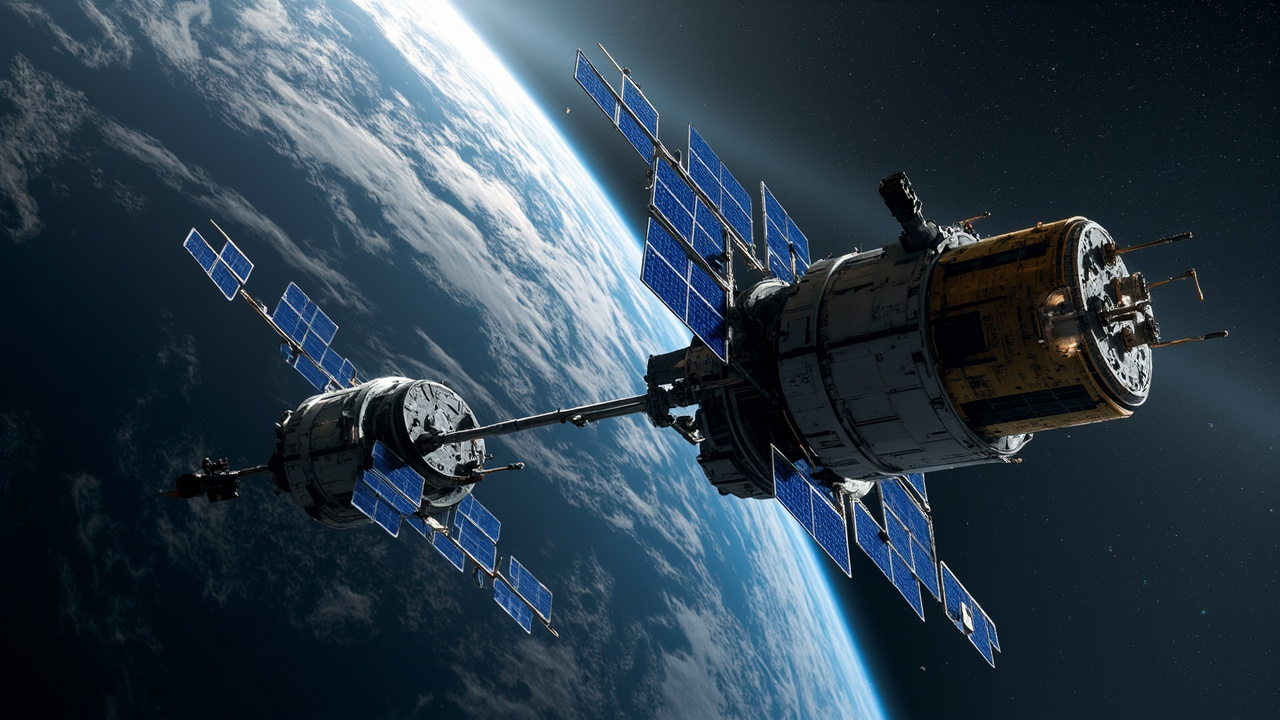
TL;DR: Starfish Space will launch its first full-size Otter servicing vehicle no earlier than October 2026 on SpaceX's Transporter-18 to inspect defunct U.S. satellites for NASA.
Starfish Space is moving from technology demonstrations to customer operations after seven years of development. The Tukwila, Washington, company confirmed its first Otter satellite servicing vehicle is complete, assigned to a customer mission, and scheduled to launch no earlier than October 2026 aboard the Transporter-18 rideshare mission with SpaceX, according to Starfish Space's September 24, 2026 announcement.
The company revealed the milestone during a celebration at the Seattle Aquarium on September 23 that brought together hundreds of guests from across the space industry. After launch, Starfish will commission the spacecraft and prepare to provide commercial services in low Earth orbit.
The first flight will conduct the Small Spacecraft Propulsion and Inspection Capability mission, known as SSPICY, for NASA. Following commissioning, Otter will approach and inspect multiple U.S.-owned defunct satellites. That sequence marks Starfish's transition from technology development to delivering services for customers in orbit.
Seven-year path from founding to first Otter
Starfish Space was founded in October 2019 by Trevor Bennett and Austin Link, according to Ars Technica's September 25, 2026 report. Bennett and Link were engineers from Blue Origin before starting the company.
Bennett said the founders saw ambitions to build big rockets and put massive numbers of satellites into orbit. They began considering how humanity would deal with increased volume of satellites in orbit and whether low-Earth orbit could be preserved.
Ideas like asteroid mining or building infrastructure on the Moon seemed too far out at the time. Improving the ability to move around in space, deorbiting threats, and extending the life of assets in orbit seemed more plausible to the founders.
An obvious business case was extending the life of large satellites in geostationary orbit. Managing ever-growing constellations in low-Earth orbit was seen as equally vital.
"So we had two business cases that we thought were meaningful," Bennett said. "What we needed was a vehicle to go match that, and that was Otter."
Bennett said the company showed resilience after a global pandemic shut the world down a few months after its founding. Over seven years, Bennett and Link kept the company fairly small, with about 120 employees.
The company has raised about $150 million to date, according to Ars Technica. Starfish Space said it has raised over $150 million in venture capital funding. Payload reported that Starfish closed a $100M+ Series B in April.
Starfish chose to procure its spacecraft bus from Astro Digital. It focused internal work on software and maneuvering technologies to enable precise rendezvous and docking and the ability to maintain a long life on orbit to service multiple vehicles.
What the first Otter will do for NASA
The first Otter will fly on a Falcon 9 Transporter mission next month, with a spacecraft bus about the size of a large washing machine and a mass of approximately 350 kg. NASASpaceFlight.com reported the spacecraft is scheduled to launch no earlier than October 2026 on SpaceX's Transporter-18 rideshare, a dedicated Falcon 9 mission to sun-synchronous orbit from Vandenberg Space Force Base.
The SSPICY mission will see Otter fly up to multiple older spacecraft and get close to them. Otter will inspect multiple U.S.-owned, defunct satellites, approaching within hundreds of meters to gather information about spin rates, current conditions, and more.
Payload reported that operators of the defunct satellites have agreed to receive a visit from the spacecraft. Otter will collect information including spin rate, spin axes, and the condition of the satellites' surfaces.
This is the first time NASA has funded a commercial debris inspection mission. The agency is paying Starfish $15 million for the flight.
SSPICY is being developed through a Phase III Small Business Innovation Research award, funded and managed by NASA's Small Spacecraft and Distributed Systems program within the agency's Research and Technology Mission Directorate. The program is based at NASA's Ames Research Center in California's Silicon Valley.
NASASpaceFlight.com reported the $15 million Phase III award was issued in 2024 and is managed through NASA Ames' Small Spacecraft Technology program. Payload reported NASA awarded the $15M Phase III SBIR contract in September 2024.
The award funds close approaches to multiple U.S.-owned defunct satellites in low Earth orbit. Otter is expected to close to within hundreds of meters of each target and begin collecting spin rate, spin-axis, and surface-condition data in 2027.
NASA has framed the flight as the first agency-funded commercial debris inspection mission and a precursor to later capture, repair, or disposal work.
"All of these will be inspections to start," Bennett said of the SSPICY mission. "But then there will be an opportunity for us to use the remaining life of Otter to do something more."
How Otter is built to service unprepared satellites
Otter is designed to do life extension and end-of-life disposal missions. With a flexible architecture, Otters can operate within multiple orbital regimes and support spacecraft not originally designed to be serviced.
That design is intended to maximize the value satellite operators can derive from their assets. Starfish aims to enable a new approach to how satellites are designed, manufactured and operated by making spacecraft serviceable after launch.
NASASpaceFlight.com described Otter as a compact electric-propulsion servicer, roughly oven-sized, designed for life extension and end-of-life disposal. Its architecture is built around three in-house systems: CETACEAN computer-vision navigation, CEPHALOPOD autonomous guidance and control, and the Nautilus capture device.
The Nautilus capture device is intended to attach to an unprepared flat surface rather than a dedicated docking fixture. That capability is central to the business case because most satellites already in orbit were never designed to be serviced.
Starfish described the Otter program as the first step in its long-term plan to build orbital infrastructure needed to support humanity's expansion into space. By making spacecraft serviceable after launch, the company aims to change how satellites are designed, manufactured and operated.
Demonstration flights that led to Transporter-18
Starfish has launched several missions to date to demonstrate technologies required for autonomous satellite servicing. The first mission, Otter Pup 1, launched in 2023.
The external orbital transfer vehicle suffered a failure, and it ejected the Otter Pup 1 spacecraft prematurely at a spin rate of 330 degrees per second. Over a few weeks, the Starfish team recovered the spacecraft, but one of its thrusters eventually failed.
NASASpaceFlight.com reported Otter Pup 1 still completed a roughly one-kilometer rendezvous with a D-Orbit ION vehicle after recovering from the high-rate tumble and losing its chemical thruster.
The company has had more success with two later demo missions, including Otter Pup 2. Otter Pup 2 launched in 2025 and has been flying in close proximity to a target spacecraft in low-Earth orbit.
It has gotten to within 1 km so far. If all goes well, a docking will occur in the coming months.
NASASpaceFlight.com reported Otter Pup 2 launched on Transporter-14 in June 2025 and has since been working toward a docking attempt after its original D-Orbit target was withdrawn. Starfish later selected Gilmour Space's ElaraSat as a replacement and has been conducting relative-navigation operations.
Starfish also partnered with Impulse Space last summer and used its software to fly the Mira spacecraft after that vehicle had completed its primary mission. Starfish sought to demonstrate that a single lightweight camera system, along with its closed-loop guidance, navigation, and control software, could autonomously rendezvous with another spacecraft.
Payload reported that in December, Starfish and Impulse Space partnered on the Remora demo, in which Starfish added software and a camera to Impulse's Mira spacecraft to autonomously approach another Mira already in orbit. NASASpaceFlight.com reported the collaboration demonstrated autonomous rendezvous to about 1,250 meters using Starfish software on a Mira tug.
Contracts waiting beyond the NASA flight
Starfish has five more Otters in production for additional missions to showcase docking, de-orbit, and life extension capabilities. The company is focused on delivering Otter servicing missions for SES, NASA, the U.S. Space Force, the Space Development Agency, and others.
Starfish holds deals with Intelsat for geostationary life extension, Space Systems Command for dynamic space operations in GEO, and the Space Development Agency for disposal of Proliferated Warfighter Space Architecture satellites in LEO, according to NASASpaceFlight.com. Additional Otters are planned for those customers.
Payload reported that Space Systems Command purchased an Otter in 2024 for $37.5M to conduct national security rendezvous and proximity operations and docking missions. The Space Development Agency awarded Starfish a $52.5M contract in January to deorbit defunct satellites in its Proliferated Warfighter Space Architecture constellation, beginning no earlier than 2027.
Bennett said the team feels nervous and excited before the first full-fledged Otter flight for NASA. He said the company gets one chance to make a first impression with the mission.
"There is always a tension that comes with seeing the first of anything fly, right?" he said.
Sources referenced
- After seven years, a spacecraft company is releasing its Otters into the wild - Ars Technica (https://arstechnica.com/space/2026/09/after-seven-years-a-spacecraft-company-is-releasing-its-otters-into-the-wild/)
- Starfish Space’s First Otter Is Going to Space – Starfish Space (https://www.starfishspace.com/press-release/starfish-spaces-first-otter-is-going-to-space/)