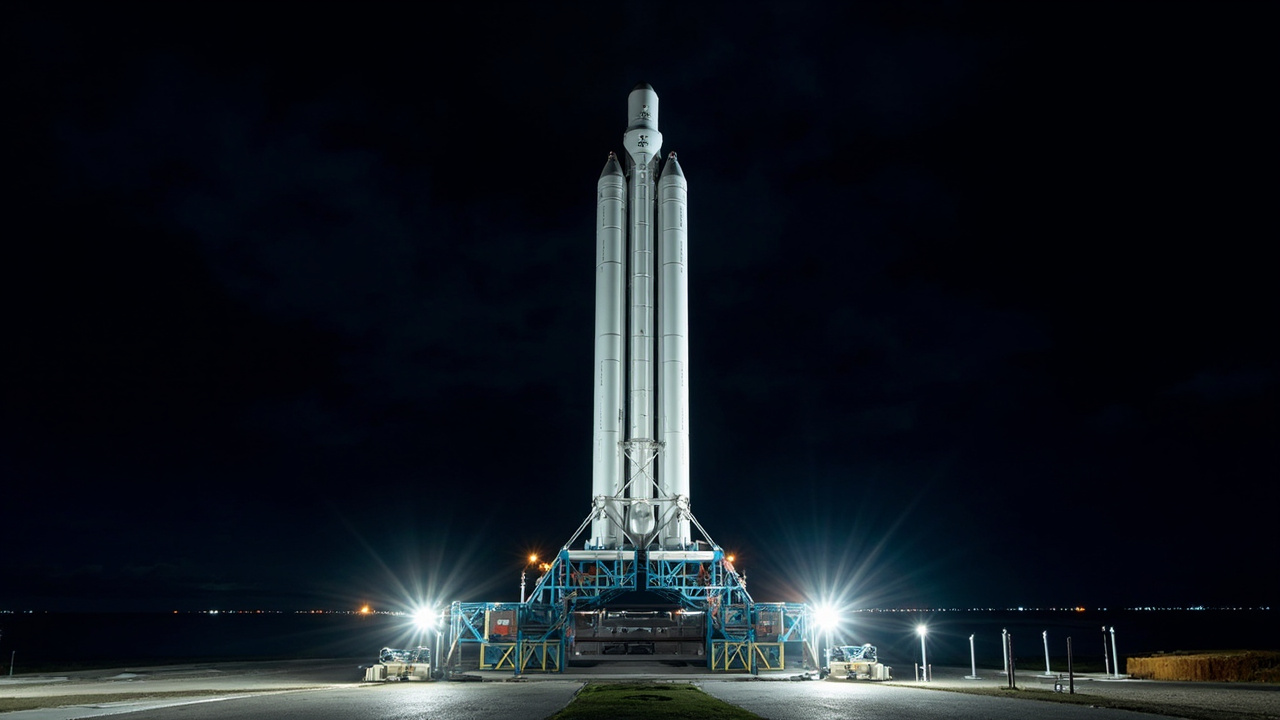
TL;DR: SpaceX is targeting Saturday, Aug. 15, at 9:12 p.m. ET for a Falcon 9 launch of the Globalstar 2-R Launch 1 mission from Cape Canaveral.
What is launching Saturday night
SpaceX is targeting Saturday, Aug. 15, for a Falcon 9 launch of the Globalstar 2-R Launch 1 mission to low-Earth orbit.
The mission is headed to low-Earth orbit from Space Launch Complex 40 at Cape Canaveral Space Force Station in Florida.
The flight will carry a batch of Globalstar communication satellites to orbit.
The mission is identified as the Globalstar 2-R Launch 1 mission.
The mission is also described as the Globalstar 2-R mission.
The payload consists of eight communication satellites.
The eight communication satellites will provide mobile services such as voice, data, and emergency support, according to statements from Globalstar reported by Spectrum News 13.
The launch is Florida's next rocket launch in the Saturday-night schedule.
The Saturday-night launch is expected to light up the night sky over Cape Canaveral.
The operation is being conducted by SpaceX from Cape Canaveral Space Force Station.
The launch pad is Space Launch Complex 40, also described as Launch Complex 40.
The pad is designated SLC-40 at Cape Canaveral Space Force Station.
The Florida launch is scheduled for no earlier than 9:12 p.m. Saturday, Aug. 15, from Launch Complex 40.
When the window opens and what happens if it slips
The 15-minute launch window opens at 9:12 p.m. ET.
SpaceX only has a 15-minute window during which the launch can be made Saturday night.
The 15-minute launch window opened terminology reflects the short nightly opportunity for the Globalstar flight.
The liftoff time is set at 9:12 p.m. ET from Cape Canaveral Space Force Station.
If needed, a backup opportunity is available Sunday, Aug. 16.
The backup opportunity is available during a 15-minute launch window that opens at 8:54 p.m. ET.
The next opportunity after a Saturday scrub opens at 8:54 p.m. Sunday, Aug. 16.
If the launch was scrubbed Saturday, the next attempt would have been Sunday with the 15-minute window starting at 8:54 p.m. ET.
The Sunday backup preserves a second same-weekend chance for the Globalstar 2-R Launch 1 mission.
Where the booster is going
This will be the 14th flight for the first stage booster supporting this mission.
The first-stage booster is identified as B1090.
This was the 14th mission for Falcon 9's first-stage booster called B1090.
The booster has a history of prior launches under its record.
The booster previously supported SES O3b mPOWER-E.
The booster previously supported Crew-10.
The booster previously supported Bandwagon-3.
The booster previously supported SES O3b mPOWER-D.
The booster previously supported CRS-33, also described as Commercial Resupply 33.
The booster previously supported eight Starlink missions.
Among those Starlink missions was Starlink Mission 6-67.
Among those Starlink missions was Starlink Mission 10-18.
Among those Starlink missions was Starlink Mission 10-59.
Among those Starlink missions was Starlink Mission 6-79.
Among those Starlink missions was Starlink Mission 6-103.
Among those Starlink missions was Starlink Mission 10-46.
Among those Starlink missions was Starlink Mission 10-43.
Among those Starlink missions was Starlink Mission 10-50.
The booster previously supported SES O3b mPOWER missions in the SES O3b program.
The record includes a crewed flight with Crew-10.
The record includes a rideshare-type flight with Bandwagon-3.
The record includes a cargo flight with Commercial Resupply 33.
The breadth of the manifest shows commercial communications, crew, cargo, rideshare, and Starlink experience for the same first stage.
How the landing will sound in Brevard County
The first-stage booster is planned to land at Landing Zone 40.
Landing Zone 40 is near the launch pad.
Landing Zone 40 is adjacent to the launch pad complex at Cape Canaveral.
Approximately eight minutes after the liftoff, the rocket's first stage booster will come back for a return to Landing Zone 40.
The first-stage booster landing at Landing Zone 40 is expected to cause a sonic boom.
The landing is expected to produce sonic booms over Brevard County as the booster returns to land.
Those watching will see the Falcon 9 booster touch down before hearing the thunderous sonic booms.
The sonic booms are expected to be heard throughout Brevard County.
Saturday night sonic booms are in the forecast for Brevard County as SpaceX prepares for a Falcon 9 rocket launch complete with booster return.
The return-to-land profile distinguishes this mission from droneship recoveries offshore.
The Brevard County sonic boom forecast is tied directly to the Landing Zone 40 return.
Residents heading to bed early were advised that this liftoff will sound a Brevard County sonic boom.
What weather officers are watching
The 45th Weather Squadron called for a 90% chance of good liftoff conditions.
The forecast applies to the Saturday-night Falcon 9 launch opportunity.
The only concerns cited were the anvil and cumulus cloud rules.
The anvil rule is listed among the weather criteria for a Falcon 9 launch.
The cumulus cloud rule is listed among the weather criteria for a Falcon 9 launch.
The 90% figure indicates a high probability of acceptable weather at the opening of the window.
The 10% residual risk is associated with the cloud rules identified by the squadron.
Weather criteria information for a Falcon 9 launch was made available alongside the forecast.
What the satellites are meant to do
SpaceX is set to carry a batch of Globalstar communication satellites, known as the Globalstar 2-R mission, to orbit.
The eight communication satellites are intended for low-Earth orbit.
Globalstar stated that the satellites will provide mobile services.
The mobile services include voice services.
The mobile services include data services.
The mobile services include emergency support.
The combination of voice, data, and emergency support defines the communications role described for the flight.
The flight is a dedicated Globalstar mission rather than a multi-customer rideshare described in the prelaunch notices.
How to follow the countdown
The FLORIDA TODAY Space Team will provide live updates beginning 90 minutes before liftoff at FloridaToday.com/Space.
The live updates will track the Saturday-night countdown from Cape Canaveral.
Coverage of the launch can be seen on Space Coast Daily TV, according to Space Coast Daily.
The 90-minute live-blogs will cover the final preparations at Launch Complex 40.
Readers can check FloridaToday.com/Space for the start of the 90-minute countdown coverage.
The countdown coverage will document the 15-minute window and any hold or scrub decision.
The Sunday backup at 8:54 p.m. ET would become the next focus if Saturday does not proceed.
Why the mission matters for the Space Coast
The Globalstar 2-R Launch 1 mission maintains weekend launch activity from Space Launch Complex 40.
The mission keeps Space Launch Complex 40 active as the departure point for the Globalstar flight.
The mission keeps Landing Zone 40 active as the planned recovery point about eight minutes after liftoff.
The 14th flight of B1090 adds another reuse milestone for a Falcon 9 first stage flying from Florida.
The inclusion of Crew-10 in the booster's history links the Saturday booster to prior human spaceflight support.
The inclusion of Commercial Resupply 33 in the booster's history links the Saturday booster to prior space-station logistics support.
The inclusion of SES O3b mPOWER-E and SES O3b mPOWER-D links the booster to prior commercial communications launches.
The inclusion of Bandwagon-3 links the booster to prior dedicated rideshare support.
The eight prior Starlink missions in the booster's log link the vehicle to high-rate low-Earth-orbit deployment before the Globalstar assignment.
The Saturday assignment shifts that flight-proven booster to Globalstar's eight-satellite communications delivery.
The delivery to low-Earth orbit aligns with the voice, data, and emergency-support mission described by Globalstar.
The voice component addresses mobile calling outside traditional networks as described for the payload.
The data component addresses mobile data services as described for the payload, according to Spectrum News 13.
The emergency-support component addresses urgent communications needs as described for the payload.
The Brevard sonic-boom expectation underscores the return-to-launch-site nature of the planned recovery.
The 90% favorable forecast from the 45th Weather Squadron frames Saturday night as meteorologically promising, pending the anvil and cumulus rules.
The 15-minute Saturday window opening at 9:12 p.m. ET defines the precise period for liftoff to occur.
The 15-minute Sunday window opening at 8:54 p.m. ET defines the precise backup period if a scrub occurs, according to Space Coast Daily and FLORIDA TODAY.
Reporting drawn from prelaunch notices published Aug. 14 by Space Coast Daily, FLORIDA TODAY and Spectrum News 13; post-launch outcomes after the Aug. 15 03:59 UTC archive cutoff are not included.
Sources referenced
- SpaceX Targets Rocket Launch for Saturday from Cape Canaveral, Launch Window Opens at 9:12 p.m. ET - Space Coast Daily (https://spacecoastdaily.com/2026/08/spacex-targets-rocket-launch-for-saturday-from-cape-canaveral/)
- Saturday night SpaceX rocket launch from Florida to bring Brevard sonic booms - Florida Today (https://www.floridatoday.com/story/tech/science/space/2026/08/14/spacex-falcon-9-rocket-launch-from-florida-cape-canaveral-to-brevard-sonic-booms-saturday-night/91271888007/)